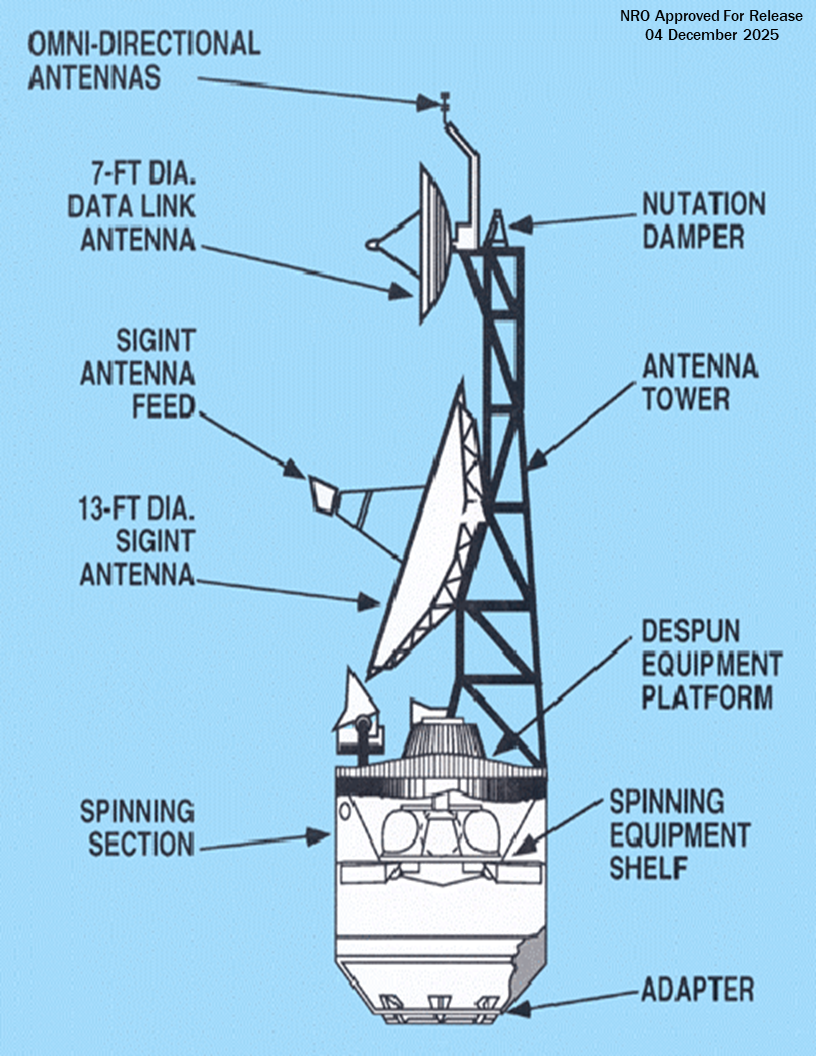
The director of the National Reconnaissance Office (NRO) recently declassified the existence of JUMPSEAT: the United States’ first-generation, highly elliptical orbit (HEO) signals-collection satellite.
Launched from 1971 to 1987 under mission numbers 7701 to 7708,
JUMPSEAT was the product of the United States Air Force’s (USAF) program at the NRO. Developed under a program called “Project EARPOP,” JUMPSEAT offered the U.S. a way of collecting intelligence during unprecedented geopolitical change and Cold War tensions that lasted until the early 1990s.
“The historical significance of JUMPSEAT cannot be understated,” said Dr. James Outzen, NRO director of the Center for the Study of National Reconnaissance. “Its orbit provided the U.S. a new vantage point for the collection of unique and critical signals intelligence from space.”
Following the end of World War II, threats of globally-spreading communism and nuclear weapons proliferation fueled Americans’ anxiety of the unknown. Across the world, the U.S. suspected that more American adversaries were building out extensive, topline defense arsenals including long-range missiles and atomic weapons. The success of the Soviet Union’s Sputnik 1 demonstrated an object could be placed on orbit, which could pose a weapons threat from space.
Thankfully, the newly-formed NRO was poised to offer the U.S. some critical answers.
The NRO’s existing electronic surveillance satellites, including
GRAB and
POPPY, already collected intelligence from their positions in low-earth orbit. The NRO and USAF, collaborating as a part of NRO’s “Program A,” were tasked with developing a foundational HEO signals collection satellite to bolster the U.S. government’s space intelligence portfolio. Named JUMPSEAT, the new satellite would be capable of operating in a HEO, or Molniya, orbit.
The NRO’s USAF members worked quickly to develop the pioneering satellite’s technology. JUMPSEAT’s core mission focus was to monitor adversarial offensive and defensive weapon system development. From its further orbital position, it aimed to collect data that might offer unique insight into existing and emerging threats.
Together, the NRO and the USAF launched the first JUMPSEAT mission in 1971 from Vandenberg Air Force Base (now Vandenberg Space Force Base) in California. Once in orbit, JUMPSEAT successfully collected electronic emissions and signals, communication intelligence, and foreign instrumentation intelligence: invaluable information that was downlinked to ground processing facilities within the U.S. From there, the data was provided to the Department of Defense, the National Security Agency, and other national security elements.
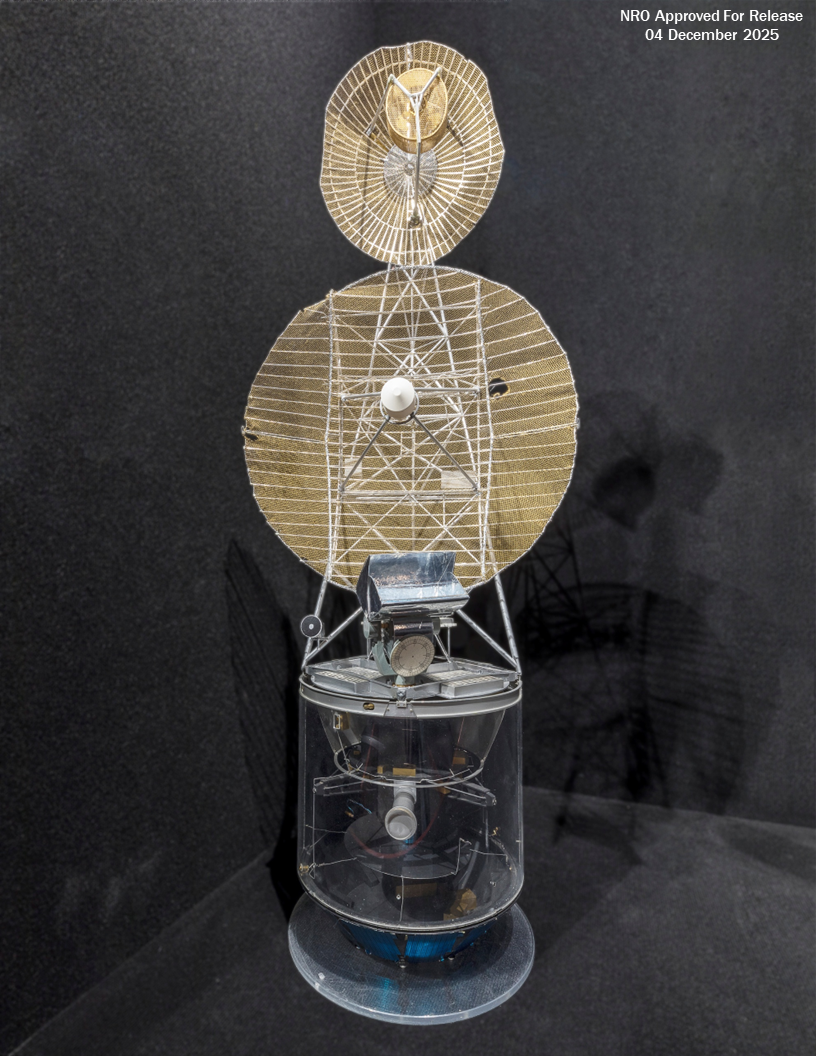
Over the decades, JUMPSEAT satellites continued to prove their worth to signals intelligence, finally operating in transponder mode until they were taken out of service in 2006. The NRO and its mission partners, including national-level decision makers and national command authorities, collaborated in its decommissioning.
The JUMPSEAT declassification recognizes the program’s long and distinguished life in support of our national security, as well as JUMPSEAT’s status as the progenitor of other HEO satellite programs.
The
declassification memorandum on JUMPSEAT provides more details on the historic program.
###Ever since its inception at the dawn of the space age more than 60 years ago, the NRO has brought the farthest reaches of the planet into our grasp – to see it, hear it, and sense it. Today, the NRO is building on that legacy of innovation, harnessing the limitless potential of space to make our nation even safer and stronger. Learn more at NRO.gov.